Wednesday, March 26, 2014

Sum of Parts

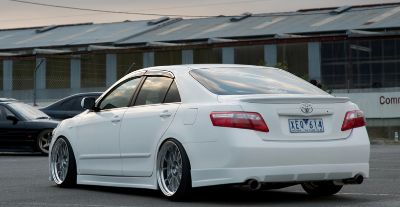
With a new generation of car enthusiasts coming through, and the rise of stifling ‘anti-hoon’ laws across Australia, it seems young people are less interested in performance and more interested in wheel fitment. It’s time for a revolution, to take back the horsepower, and the freedom and adrenaline that comes with it.

(Full disclosure: Brisbane Motor Imports thought Track Shun was so cool and knowledgeable, they asked us to write an advertorial on the benefits of engine swapping. Consider supporting a company that supports a grass-roots automotive blog.)

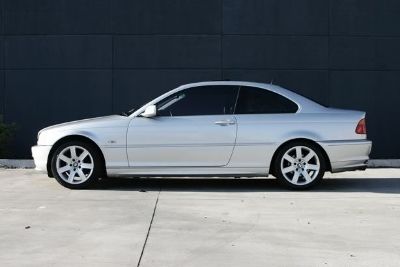
Don’t get me wrong, I love a good stance. But there’s a line between form and function, where choosing straight looks over how your automobile accelerates and handles makes you nothing but a poseur. It’s just a progression of the ‘VIP’ fad where kids would buy automatic E46 318i’s and stuff 21” chrome wheels under the car and two fifteen inch subwoofers into the boot.


When I was a teenager we used to laugh at them. They would call themselves car guys, but wouldn’t really have any idea about what it means to be a car guy. Cruising Chapel St or Brighton Le Sands or Cannon Hill Macca’s does not maketh a car enthusiast. There’s something about feeling the rush from a big turbo kicking in and propelling you down the road that you can’t get out of your bones. It’s twice as much fun if you’re in a car that wasn’t built to do such things. Three times as much if you happen to catch the look on the faces of the people in the other car.

This was how we spent our youth. There were countless days and nights preparing small cars for big turbo motors from defected donor cars that we would drive over from interstate. Or in friends’ driveways with gravel in our back, dropping high-compression Nissan engines into old Toyotas, Supra turbo motors into Bunderas, and Holden V8s into whatever we could find. Fitment was cool, but going fast was cooler. Come to think of it, it’s still how I choose to spend my weekends.

After years of experience, you quickly discover that Japanese half-cuts are the best way to do conversions. They come with the wiring loom, auxiliaries, mounts, and just about everything you would need to do a clean, quick swap. They’re also cheap. Buying a performance half-cut and stuffing it into your daily driver is significantly more fun and cost-effective than buying a pre-packaged performance car. Less unwanted attention from the boys in blue, too.

Waiting until you’re off your Ps before getting a loan and buying a fast car is fine. You know what’s better? Celebrating getting your full licence by dropping in a turbocharged Celica GT4 engine from a Toyota half-cut into the Corolla that your grandmother gave you when you got your Ps. Invite your mates around for the weekend and pay them in beer and barbeque. It beats the disappointment Nanna will have when you finally sell the car after having it on Gumtree for six months, and it’s cheaper than dropping $9,000 on a Celica GT4. You’ll have something unique, a package that you’re already familiar with, and a huge sense of accomplishment. Also, a very quick car.
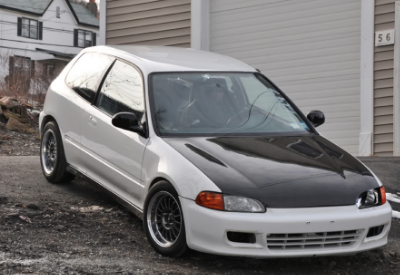


I don’t even know why you would wait until you’re off your P-plates. Don’t tell me that you can’t have a fast car these days because of the restrictions placed on young drivers. You really need to drive pretty much any performance Honda to discover that an engine doesn’t have to have forced induction or eight cylinders or even much capacity in order to produce buckets of adrenaline. Buy an early-90s Civic, grab yourself a Honda half-cut from any Integra Type R or VTi-R, and watch the hilarity ensue. A revvy naturally aspirated motor in a light body will blow the doors off pretty much anything out there. Don’t like Hondas? Buy a classic 280ZX and a Nissan half-cut from a 370Z and get to work. Retro looks with kick-ass performance.

Maybe you’re already on your full licence and all your mates are driving V8 Commodores. You’re probably a bogan, but that’s fine. You don’t have to stray too far from the pack to have something decent. Find yourself the cleanest VL Commodore you can and pick-up a Nissan Skyline R33 GTR half-cut. For less than the price of a stock VL Turbo, you can have a VL Twin-Turbo that will destroy all those V8s that your friends spent way too much money on.
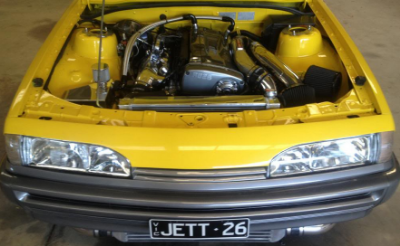


If the current trend is buying a slow automatic car and lowering it on some dished wheels with tyre stretch, then maybe drop an STi motor into a Subaru Brumby and put a set of semi-slicks on some ugly steel wheels. Stick a 20B into a 929 coupe and go to the Jamboree. Buy your uncle’s Cressida and install an Aristo engine. Go out to your garage and be a real car enthusiast. Be a trend-setter.


Brisbane Motor Imports have a bunch of really cool half-cuts available, as well as engines, transmissions, and new and used parts. Check out their website and get inspired.

Thursday, February 13, 2014

American Road Test

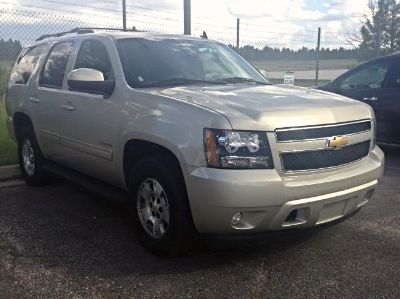
What better way to zig-zag across the American West than in a Chevrolet Tahoe? We put the American SUV through its paces over four packed days.

(Full disclosure: Victorian American Imports thought Track Shun was so cool and knowledgeable, they asked us to write an advertorial on the Chevy Tahoe, one of the many American cars they import to Australia. Consider supporting a company that supports a grass-roots automotive blog.)

I was in Flagstaff, Arizona. From the town centre, perched on the side of a mountain and surrounded by tall pine trees, the cabbie told me about his career playing bluegrass guitar. He drove me to a man in a suit with thick-rimmed glasses and silver hair that had a touch of class from a different era, and I was handed the keys to my champagne-coloured Chevrolet Tahoe LT that I would use to cover thousands of miles in only four days.


The LT is a step-up from the basic LS, with heated leather seats and a Bose stereo (amongst many features), but is below the range-topping LTZ that boasts standard features you would expect to find in a Porsche Cayenne. The handsome exterior was matched with a 5.3 litre Vortec V8 motor that produced a surprising 240kw of power and 450nm of torque, but you can option it with the 6.2 litre V8 when ordering through VAI.


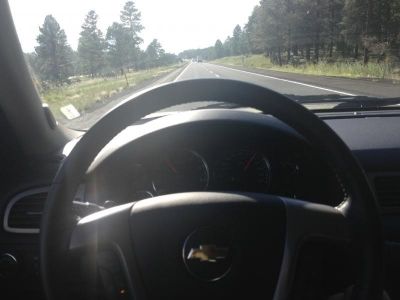
I shot off down the freeway with a big smile on my face, setting the cruise control to a comfortable 120kph as I familiarised myself with the car. My iPhone cable plugged into the USB port and streamed some roadtrip playlists as I pointed the car north towards the Grand Canyon. I was happy to be sitting there. I arrived at the Canyon just as the sun was on the horizon. That golden light cast shadows across that amazing place. I soaked it in before jumping back in the Tahoe setting off again.


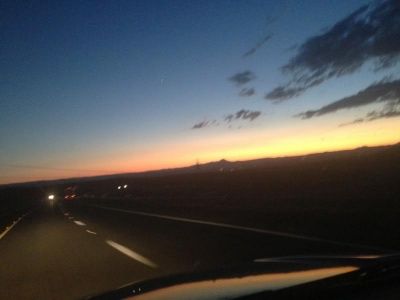
The drive from the Grand Canyon to Las Vegas was spectacular. The light at dusk was some of the prettiest I've ever seen and kept going for hours as I chased the sun. I kept my eye on the fuel gauge of the Tahoe, thinking that this American SUV would be sucking down the petrol like Coca-Cola, but the needle barely moved during the many hours of driving. Late into the night and without much left in me, the car drove over a peak and revealed a carpet of lights in the valley of Las Vegas.

In the context of the Australian market, the Tahoe makes a lot of sense. The car can be optioned with the 6.2 litre V8, which not only has a lot more power, it also makes servicing the car at your local Holden dealership a lot more convenient. They come in 2WD or 4WD, depending on what you need. They can be optioned with up-to eight seats and with a towing capacity of 5.5 tonnes. But the thing that makes the most sense is that the Tahoe is significantly easier to drive and (I suspect) live with than most Japanese seven-seater SUVs.

Like most Aussies, I expected the Chev to be an oversized, uncouth Yank Tank. But I couldn't have been more wrong. As the smaller sister to the celebrated Chevrolet Suburban, the Tahoe still boasts more than enough space for most people. But because it’s smaller, it’s easier to park and has better visibility. It has more useable space than a Toyota Kluger, but doesn’t feel too big for the road like a Toyota Prado can. The cabin is comfortable and has excellent build quality. There's a reason it has a consumer rating of 8.6/10.

I spent the next day driving everywhere. I’ll admit that I felt pretty good handing a Greenback to the valet and jumping into the captain’s chair of the Tahoe with my sunnies on. Around downtown Vegas the Tahoe was just as well-mannered and as easy to maneuver as ever, and looked spot-on in her metallic paint shimmering under the bright sun.

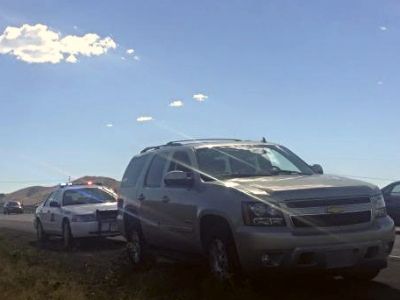
The following day I drove from Las Vegas to Salt Lake City, cruising through the enourmous cuttings that are a marvel to modern engineering. Normally after a few hours of driving, my years of bad posture tend to bite me in the lower back, but I was perfectly comfortable in the Chevy. The seats were big, not too soft (or firm), and had beautiful black piping trimmed throughout the leatherwork. Just over the border I had to fill-up for the first time since I’d started. Impressive considering I’d been driving for three days through a combination of city and freeway traffic. After swapping stories with a local uniform, I rolled into Salt Lake City to find my hotel.


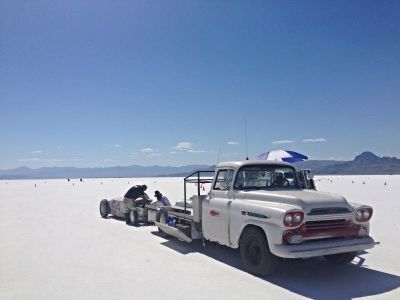
The reason for my trip was Speed Week. Each year, the Bonneville Salt Flats hosts mad people from across the globe, trying to go faster than they ever have before. I arrived the following afternoon. With the summer heat radiating off the brilliant white salt flat, I was thankful for the powerful climate control in the Tahoe. I marvelled at the incredible machines that lined the pits as the roaring engines echoed in the distance.


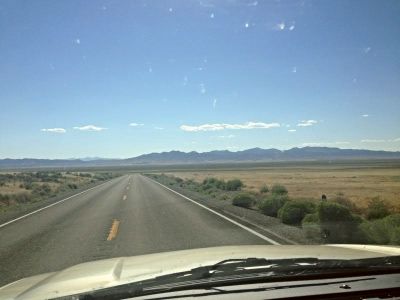
My ambitious plan was to leave Bonneville that afternoon and make my way to San Diego, at the very bottom of the Californian coast. About 700 miles. I dialled in Pahrump, Nevada into my GPS and set off. It told me to head south on a back country road that followed the original Pony Express, right down the guts of the state. Two hours in I found my first town. Then nothing for another couple of hours. The scenery was absolutely spectacular. Rolls of hills, crumpled up like a rug that's been pushed, and a road that cut straight through them.


Once again, the car performed flawlessly. It ate up the miles as I passed through Pahrump and charged towards San Diego through the warm night air. I hit my destination and visited a friend the following morning before heading to Los Angeles Airport, reluctantly handing back the keys to the Chevrolet. I’d absolutely loved the versatility of the car, being just as comfortable on the highway as it was around town. It would be a perfect family car or dedicated tow rig for touring. Throughout the roadtrip it exceeded my expectations.

VAI imports the Chevrolet Tahoe to Australia and performs right-hand-drive conversions that are as high quality as the factory fit and finish. They can order the Tahoe (or any other type of Chev, GMC, or Dodge truck) to meet your requirements.

Dirty Dreams

When I was a kid I used to ride a little metal trike around the house. I wasn’t even all that young. I must have been around seven or eight years old, and the trike had clearly been designed for toddlers. It was made in a time when colour television was revolutionary and Bruce Jenner was still respected. The trike was blue and had hard white plastics grips and I used to ride it as quickly as I could around on the newly exposed floorboards. I loved the way the front wheel lost traction during acceleration and how the rear-end would oversteer around corners.

Around the same time, Dad would let me change gears as we drove our old Chrysler Galant. Any possible excuse to be involved in the driving. We got so used to it that it became the norm and we would carry a conversation as we came home together from school. It even got to the point where Dad would forget to change gears himself when he was alone in the car.


A few years later, after Mum had banned the trike from the indoors (and my being far too big for it by that stage anyway), I used to pretend the house was a rally stage. Every door was a ‘caution!’ corner between two trees, and each corner was loose with gravel or snow or mud. Even if I was walking normally I would be grabbing handfuls of opposite-lock in my head. But most of the time my hands were out in front of me, scrambling at the imaginary steering wheel and smashing the gearknob into second gear as the rear quarter-panel kissed one of the trees mid-corner. Often I would sneak off to go and sit in the car and practice driving, visualising myself cruising to school to pick up the girl I had a crush on that week.

When I was eleven I drove for the first time in a Holden SB Barina City on a fire-track half the size of the car. It was just before midnight and my father and I were setting up camp to get a few hours sleep before the Leonid meteor shower rained down above us. The experience lived up to all of my expectations. It was a world of freedom and responsibility that I craved.

From that point on, cars were it for me. Not even cars -- driving. I didn’t care what I was driving, as long as I was. I still have very same feeling today. For me, the sensation of driving provides me with one of the greatest feelings of freedom that I’ve experienced to date.

Sunday, February 2, 2014

Choosing The Best Car Loan

There are a lot of options out there when it comes to car loans -- often too many. As someone who has worked in the vehicle finance industry, here are some tips on how to find the best car loan for you.

(Full disclosure: RedStar Finance thought Track Shun was so cool and knowledgeable, they asked us to write an advertorial on the subject. Consider supporting a company that supports a grass-roots automotive blog.)

You can’t help who you fall in love with. For car enthusiasts, you can’t help what type of car you fall in love with. I know this because I have a particular soft-spot for the Jeep XJ Cherokee, despite it being not at all good for anything other than low-speed drifting in the wet. In most cases, the car you fall for will require car loan in order to make it a reality.

Deciding on which car will take residence in your driveway is one of the best parts of the process. Deciding on how to finance it can bring on trichotillomania, unless you know where to look and what to look for in a finance company. There are really two things that you want in a car loan: the best rate, and an easy application process. Our friends at RedStar Finance are one such financier that offers both same-day approval and cheap finance.

It’s easy to make claims like that without backing it up. But RedStar Finance is able to do both because they have a wider range of finance options. You see, most car finance companies will generally use a single bank to finance their loans. RedStar Finance gets to cherry-pick from seven of the best vehicle finance providers in the country, meaning their customers are always getting the option that suits their situation the best.


If your face turns into a spatula when you start trying to figure out what all the numbers mean, then I would suggest looking at the comparison rate. A few years ago the government introduced a mandatory comparison rate for all lenders. The point of the comparison rate is to incorporate all costs involved in the car loan (except for government fees, taxes, and insurance products), meaning you can compare it against another car loan to see which one will be cheaper for you in the long-term. It’s a great way to see how much you can expect to pay.

As someone who has worked for a number of car finance companies over the years, I’ve learned that the absolute cheapest finance isn’t necessarily the best. Some car loan offer greater flexibility and could be a better option for what you want to achieve. Which is why talking to a car loan expert at RedStar Finance is a good idea as they can recommend the best deal, potentially saving you thousands over the course of the car loan.

You can’t always choose which model of car you fall in love with. But you can choose which car loan provider will finance the purchase. Pick a company that offers same-day approval from a variety of banks, and has experts with proper experience.

Thursday, January 30, 2014

Driving Without Borders

In July of 2013 I purchased a 1993 Ford F150 Flare-Side V8 and drove from one side of North America to the other. I wrote about my adventures on the blog Driving Without Borders. Here is a small video I made of the roadtrip.

Driving Without Borders from Ben Zachariah on Vimeo.

Wednesday, February 13, 2013

Down & Out

I'm a bit of a closet Mitsubishi fan. My very first car was a 1979 Lancer fastback, and the brand has always done things that quietly impressed me. But everything they did felt like it could have been better still. (The pillarless Magna, the Triton, the capped-price servicing, to name but a few.)

The all new Mitsubishi Outlander continues that theme. In each generation of model variant, you look for and expect the car to feel like better version of the last. I felt that in my last article on the Hyundai i30. I felt it recently in the new Opel Astra. The thing about the Outlander is that it feels newer, like it has lots of technology and stuff for the salespeople to point at, but to the detriment of the car.

The CVT gearbox, which literally means Constant Variable Transmission (don't think about the name for too long), is just as shit as it's even been in any car, ever. Much like the transmission in the old Honda HRV my mother owned, it feels like a metal box filled with rubber bands that are controlled by the processor of an early Motorola Razr flip-phone. It's clunky, unintuitive, and absolutely fucking pointless when we have a century of R&D that makes conventional automatic transmissions infinitely superior.

The interior is a bizarre mix of excellent quality and very poor quality. The woodgrain in the Aspire model tested is actually quite good, but the centre dash uses an inconsistent piano black trim instead, surrounded by cheap plastic. The steering wheel is too thin and the leather too cheap, but the switches are great. The indicator stalk is not. I like the Rockford Fosgate stereo, but the super-bright screen for the grainy reverse camera almost blew my head off when I was in a dark car park at night.

 photo 250f5e92-cb02-4853-a955-083311f0060b_zpscd55e3ae.jpg


Out on the road, the Outlander continued the theme of excelling in some areas and being really strangely bad in areas where it should be good. I like stiff suspension in my cars as it provides better feedback, and feedback means more information to the driver. The Outlander's front-end is stiffer than a teenage boy in a tittie bar, yet somehow provides absolutely no feedback through the incredibly odd steering. It felt like the steering box was made of cardboard. I've never felt anything like it and I absolutely hated it. The headlights are perfect. What truly surprised me, though, was how well this thing corners. The Electronic Stability Control is subtle and ensures the car is where-ever you want the front-end to point. The brakes and Electronic Brake Distribution work effectively. The engine is asthmatic and should be used in portable generators only. The ECO and 4WD buttons are laughable.

With Mitsubishi dropping their 10-year drivetrain warranty on their new cars, there's less incentive to buy one of their cars. Once you drive the all new Outlander, the incentive is almost nil. Bizarre is the word that keeps jumping in my head when I think of the latest Mitsubishi Outlander. It's like they've started with the old model, pop-riveted a bunch of new technological gadgets that they bought from eBay onto the car, and failed to drive it to see if any of it actually made the car better. If you're looking for a soft-roader, either get an ix35, or wait for the new Rav4 to arrive.

Sunday, September 30, 2012

Small Surprises

It’s taken me years of practice to properly explain to normal people why it is that I’m a car guy. And since Hyundai released the first i30, it’s taken me years to figure out how to explain to other driving enthusiasts why it’s such a great car.

The first time I drove the original i30 it was a turning point for me. I’d never thought of a Hyundai as anything more than budget transport. But driving this zippy little hatch, I couldn’t keep the damn thing within the speed limit, and it remains the most fun I’ve had getting to and from a funeral. A few years later I took a diesel i30cw wagon down to Phillip Island for a weekend. It was bigger, better looking, and what it lacked in ‘zip’ it made up for with decent torque and amazing fuel economy. On the road the i30cw CRDi felt like a nose-heavy dart. With the weighty diesel engine at the front, the suspension felt like it struggled a little bit over road undulations, thumping and bouncing at its worst. Which wasn’t often.

Hyundai kindly loaned us their brand-spanking i30 diesel hatch as an evaluation vehicle for a time. My unabashed love for the previous model notwithstanding, I snatched the keys to see how this new model compares. It’s clear that their engineers have focused on the dynamics, playing with the suspension, moving the engine, and getting rid of that nose-heavy-dart feeling almost completely. The buttons, knobs, and all of the switchgear look as if they’ve been lifted straight out of the old model; which is no bad thing. Besides a redesigned interior with better quality plastics, it’s the ergonomics that impressed me. I really appreciate good ergonomics. The stereo also now comes with a built-in hard-drive so that you can transfer your favourite tracks so they’re always at hand. As a gift to my friends in the office, I’ve loaded up the stereo with a bunch of songs from a selection of genres.
Photobucket

The small capacity diesel, though not a powerhouse, is no slouch, either. Producing almost 100kw and 260nm, it’s more like a petrol engine in character. It’s mated to a traditional six-speed automatic transmission. For daily driving, the gearbox is damn-near perfect. It has the same feel of low-geared BMWs, taking off with purpose and no fanfare. For spirited driving, however, it’s not quite as capable. In manual mode, stuck next to that small oil-burning donk, it’s certainly got enough there to create some fun on twisty roads, but you’ll be wanting for more if you do any serious driving. The highway is where this car really shines, though. For the first time in a long time, I was actually enjoying driving down to the Peninsula and back. With a combined economy rating of 5.6L/100km, I almost ran out of fuel simply because I’d stopped remembering to look at the gauge.

It’s comfortable, practical, and one of the best all-rounders I’ve driven. In my mind, this model has overtaken the benchmark Toyota Corolla and market-favourite Mazda3, and now sits on par with the Honda Civic in terms of build quality. Hyundai have also introduced capped price servicing for the first three services, and are now offering 0.9% interest. But the kicker for me is the five year, unlimited kilometre warranty.

I’m clearly not the target market for this car. I’m a car guy that prefers manual, rear-wheel-drive cars with big engines that I can abuse all day long and generally break down on me all of the time. The idea of me owning an automatic Korean diesel hatch is absurd. But for a split second there, the thought did cross my mind. And that says a lot about this car.

Friday, July 8, 2011

The Prancing Horse

As a child I used to play with Matchbox cars about as much as kids nowadays watch Ben 10. I.e, more than is healthy. Each car would have its own garage between the black keys of our beautiful, ancient piano. Probably my favourite would have been the Ferrari, which I now know was a 308 GTB. It was aggressive and confident; masculine yet feminine. It just stood out amongst all my other cars. So much so, in fact, that I've always identified myself as a Ferrari guy, as opposed to Lamborghini people, who grew up with Countach and Diablo posters adorning their bedroom walls.


A friend of mine recently imported a fibreglass-bodied blue Ferrari 308 GTSi Quattrovalvole from England, and due to a road accident, he unfortunately can't drive for a few months. Nick offered me a drive in the Ferrari, which was literally a dream I've wanted to fulfill since I used to wet the bed (a few months back). Naturally, I jumped at the chance.

Most Ferraris are so well designed, so proportionately perfect, that it's hard to get an idea of how big they are in the real world when you see them in print. Their latest Grand Tourers are monstrously huge, but their Enzo-era sports cars are surprisingly small. Pininfarina, and to a lesser extent, Bertone and Zagato, are masters at ensuring that overweight cars look like supermodels, and tiny cars have the desired amount of road presence. So, as I walked around the 308 I was about to drive, I couldn't help think how this Ferrari was the approximate size of my old NB MX-5. A concept I struggle with, even now.


Older Ferraris are known to be difficult to get in and out of, but the 308 wasn't all that hard. In fact, I almost enjoyed the small challenge. It's not as difficult as, say, a Lotus Exige to enter and exit, but it's challenging enough to make you aware that you're not just jumping into any old car. You know you're about to drive a Ferrari.

Turning the key produced nothing except a click and some faded lights on the dash. After spending almost an hour waiting for the Marshall Batteries man to come out and looking over the car to try and find the battery (FYI, it's under the spare wheel), we finally got it started. We enjoyed about 30 seconds before the car used the remaining petrol in the fuel lines. Customs had, of course, drained the tank. After a stint to the petrol station by the kind battery man, I was on my way.

With the car briefly warmed up, the dog-leg gearbox was fantastically stiff and notchy. It was a joy to use the chrome, gated shifter. The pedals are close together and off-centre and there is no dead pedal. This means that heel-toe downshifts come easily, but your left foot cannot relax is and is always at the ready. Another sign, then, that this is not a vehicle to pop down to K-Mart in.


But the engine told another story. In normal traffic, the car was positively placid. It was calm, easy to drive, comfortable. For the trip across town, I wondered whether drivers of the past were just pansies who got hard-ons for anything that looked a bit sexy. Except for the noticeable weight difference and quality interior finish, it didn't feel worlds apart from my 1979 Mitsubishi (Chrysler) LC Lancer fastback.

That was, until, I got to the other side Melbourne and onto the starting grid of a set of traffic lights, revealing an open, five-lane highway. Not wanting to destroy a Ferrari clutch, my launch wasn't particularly aggressive, but it was still surprisingly quick. The car pulled away from the lights with purpose and with a crescendo of metallic, roaring noise. Above 4,000 rpm the V8 mounted behind my left ear really came alive and planted all 240hp (179kw) to the fat Michelin TRX tyres at the rear. Gear changes aren't fast, but I'm sure practice would improve this. Through second and third gears, the Ferrari is wonderfully quick. I can only imagine it being akin to flying an old Spitfire. It's all about feeling connected with the entire car. You sit within it and become a part of it. Sitting so close to the ground just enhances the feeling of speed. It's a beautiful experience for a driving enthusiast.

As the rain set in, there was only one exciting moment when the back-end started to out-pace me through a long corner. The vehicle is so well balanced that it was easy to drive through the drift and correct it smoothly. Considering that the engine is mounted towards the back of the car and I was running on 30 year-old TRX tyres, I was surprised that was the only butt-clenching incident. Happily surprised. The brakes seemed fine, but in that weather I wasn't going to put myself in a position to test their full potential. The (non-powered) steering, though well weighted at speed, is unpredictably heavy and requires a bit of strong-arming when crawling along.

With dark clouds and teeming rain, I was able to get acquainted with the quirky electronics of the Italian sports car. I turned around and headed to my final destination, enjoying the pop-up headlamps (that are now extinct on modern cars) and charismatic window wipers. Yes, even the wipers on older Ferraris have character.

And that's really what this experience has taught me. Emissions laws, safety regulations, and the need for cars to be able to do everything imaginable has meant the driver is so detached from the modern car. People may look at owners of older, unloved Ferraris such as Mondials and 308 GT4s and think that they're badge snobs, but I'll know better. These cars have more charisma and driver interaction than damn-near all sports cars sold in the past decade.

Time to get my Matchbox cars out and start dreaming again.


Special thanks to Nick for the opportunity of a lifetime. Get well soon, mate.

Tuesday, July 5, 2011

2011 Australian International Motor Show

The 2011 Australian International Motor Show. The impressive-sounding name almost implies that our market is respected by international automobile manufacturers. The unfortunate truth is that we're not. We get the old concept cars that have already done the rounds for the past year, and if we're lucky, we might get a left-hand-drive version of some model we probably won't ever see on our roads. This year was a prime example.

Not only that, but we only get the Motor Show in Melbourne once every two years now, as we alternate with Sydney because of financial concerns the car makers had. I can deal with that, though, as an annual show of the same cars does get a bit tedious.

But when my most anticipated manufacturer, BMW, doesn't bother to bring any cars that are on sale, I get annoyed. Their special eco-hybrid concept car thing, which came out ages ago, is not particularly interesting. I'm not allowed to sit it in, I'm not going to be buying the thing in the next couple of years, so it's really only a study in car design. Yes, it's a nice concept car, but it's not real. And that's what the Motor Show should be about.

We all read the specs in the magazines, look at the pictures, and watch the videos on YouTube. But the Motor Show is where you get to sit in and feel what each car is really like. Of course, it's not quite as good as driving them, but you're able to experience the ergonomics, the seating position, the slickness of the gearshifter, and the quality of the leather and plastics.

The new Range Rover Evoque was impressive, and as it's based on the Freelander2 that I so enjoyed, I imagine will be a cracking drive, too. As cool as it was, with Recaro-esque seats (without the bolstering), leather-trimmed dash, and huge moon-roof, the price-tag is still far too hefty for my liking. The Sport we looked at had two doors and was $127,000. Poor value.

The Mitsubishi Lancer Ralliart was good value when compared to the Evolution that sat next to it (if you made it to the top of the stairs without a sherpa). But drop the extra $10k on a Volkswagen Golf R, with real, thigh-bruising bolstering, blows the idea of the Lancer right out of the water.

Audi's R8 Spyder continues to be one of the most beautiful supercars on sale. The Audi designers should teach the Lamborghini designers what a curve is.

Mercedes-Benz had their new C63 coupe alongside their new CLS63 and SLS. The CLS was the most striking in it's red bodywork with big black wheels and beautifully designed interior. However, the SLS didn't draw on my emotions like the original 300SL Gullwing at the other end of the building. Most people walked past the "new" SLK without realising it was there. Mercedes-Benz will have a hard time against the Z4.

Despite not having many models for sale in Australia, Skoda put on a good show, even allowing people to sit in their (real!) rally car, which was nice. They continue to surge forward in Australia with ever-growing confidence.

Holden and Ford continue to copy everyone else as well as themselves (both releasing Black Editions, really?). At least FPV is learning that the subtler, the better.

There were a number of things I took with me after I'd left the Show this year. The first was that I was utterly disappointed that there was no BMW stand. No M3 Pure, no 1M, no M5. The second was the feel of the Mercedes-Benz G-Class, which, in my mind, won the award for best supporting actor. I loved how agricultural and secure the doors felt and how they didn't feel like doors on any other car at the show. My final thought was how I still yearn for a Maserati Quattroporte GTS. They are one of the most magnificently looking and sounding cars in the modern era.

Thursday, June 23, 2011

Traning Wheels, Postscript

A few years back I wrote two articles that looked at driver training for young people. Training Wheels, Part One and Part Two expressed my frustration at how young people are told not to speed and be idiots on the road, but are rarely exposed to the consequences. Unless they are forced to live through a horrific event, they don't realise just how easy it is to ruin or end a life by way of a car.

At the time, I said that it would be beneficial to expose kids to a crash. Strap them into a car and roll it, or even crash a car into a pole at 50kph in front of them. It sounds a bit far fetched, but it wouldn't be quite as hard to do as you would imagine.

So I was very heartened to see the NSW Premier leading an in-your-face demonstration for schools. As the video of the event shows, it was a very confrontational experience for the students, who had to graphically witness the death and trauma caused by a common road accident.


Bravo to the NSW Government for supporting this initiative.

Tuesday, February 15, 2011

Practically A Porsche


When the Cayenne was released almost a decade ago it was somewhat controversial. The car was pretty ugly, it felt poorly designed, and it didn’t drive the way one would expect a Porsche to drive, SUV or not. We were expecting something better than the benchmark SUV at the time, the BMW X5, and it just wasn’t.

The second generation, all-new Cayenne is a different beast altogether. It seems to have shaken all previous criticisms and evolved into something worth pining for. Sitting in the supportive leather seat, the interior feels like it was based on Porsche’s four-door GT, the Panamera, which is no bad thing. The leather, plastics, and metal highlights really heighten the sense of luxury in the cabin. The buttons have an excellent feel to them, and none of the interior panels have that cheap hollowness to them that plagues cheaper (and not-so-cheaper) SUVs.

Porsche’s engineers really lifted their game with the new Cayenne. For sure, it’s nowhere near as rewarding to drive as its stable-mates, but as far as the luxury SUV sector goes, this is up there with the best of them. It’s a very easy car to drive on a daily basis and at no time do you feel as if you’re behind the wheel of the two-tonne tank that it is. There’s an overwhelming sense of weight and security behind this thing, but not at the expense of its handling or its pace. The Cayenne holds flat around corners and is beautifully neutral in feeling.

Porsche Cayenne


But it’s the engine that really impresses. The turbo diesel V6 strikes an almost perfect balance between power (176kw), torque (550nm), and fuel economy (7.4L/100 combined). The exhaust note isn’t as horny as the V8 option, but it means the car feels calmer to drive. That endless torque constantly invites your foot to sink into the pedal to propel the Cayenne down the road, in the same absurd fashion as the Range Rover Sport TDV6 or BMW X5 xDrive40d. It’s a very enjoyable machine to captain. Pulling up at the lights will trigger the auto stop/start feature which will turn off the engine to save fuel until you lift the brake, when the engine fires to life in an instant.

This particular Porsche also enjoyed keyless entry and start, which means that simply having the key in your pocket is good enough to jump in and drive off. The auto-tailgate was appreciated when carrying a few too many bags of groceries, and I’m sure the soccer mums with babes-in-arms will love it too. Handy features that make living with the Cayenne very easy. It doesn’t have the most luggage space in its market, but it has more than enough to satisfy most families. The ride height, coupled with its big doors, makes the Cayenne effortless to enter and exit.

If you’re looking at a practical, well-built SUV, it’s very hard to look past Porsche’s latest Cayenne diesel. It’s not going to break any land-speed records, but with a truckload of torque and CO2 figures that are better than a four-cylinder Mazda6, along with practical, real-world features and an excellent design, it’s very hard to ask for anything more in a luxury SUV.

Monday, March 29, 2010

Short Queue


The first thing you notice when you approach the new Audi Q5 is it has beautiful, clean lines. Arguably, the design is so minimal it almost borders on bland. But if you consider this vehicle is targeting the hip-but-conservative-lycra-wearing-Polo-collar-popping family man, Audi seem to be on the money when it comes to styling. In any case, I like how it looks.

Photobucket

To propel this compact SUV there’s a choice of 2.0 litre turbo or 3.2 litre V6 petrol engines and a 2.0 litre turbo-diesel, but the one we have today is the 3.0 litre turbo-diesel. With 176kw of power and 500nm of torque mated to a seven-speed dual-clutch transmission, it’s no slouch, and propels the 1865kg of Audi to 100kph in 6.5 seconds. On a long freeway trip the Q5 returned 7.9 litres per 100 kilometres. So what we have here is a respectably quick car that is also pretty frugal. Good thing, too, because at $72,600 without options or on-road costs it’s not exactly the bargain of the century.

In the cabin the dash is very conservative and fits with Audi’s current interior theme – very functional, very German, very quality. The thick, perforated leather steering wheel was nice to use and had the S-Tronic paddles at three and nine, ready to punch up or down through the gears at a moments notice. With decent sound quality and punch, the infotainment system can be somewhat counter-intuitive to use at times, but it’s the sound deadening that is most impressive in the cabin. Close the (noticeably short) door and you’re enveloped in a silent cacoon of leather and quality plastics and a strange tactile faux woodgrain trim.

The best thing about the Audi Q5 is that it is just as comfortable to jump in and scoot around town as it is on the freeway. It’s an easy car to live with; and that is a hard thing to get right.

But how does the latest from Audi actually perform on the tarmac? Up to this point the Audi Q5 has proven fairly conservative and minimal, however I wasn’t expecting that trend to continue out on the road. Despite having a fair whack of performance at its disposal, the engine seemed a bit constrained and not as responsive as it could be. Though the dual-clutch gearbox is as good as ever and makes the most of what the engine has to give.

Around corners and the Audi stays relatively flat, but push it even a little bit and you’ll get boring, predictable understeer. Yes, this car is very safe and very easy to drive, but it lacks any sort of excitement whatsoever. The steering is so unresponsive it could almost be described as being numb. It has the feedback of a hovercraft. I’m sure some people would like it (boring people), but as someone who enjoys driving, I was completely uninspired when I had arrived at my destination.

But my biggest criticism of the Audi Q5 is that it has almost no character. It is a beautifully engineered compact SUV that bores me half to sleep. It will carry out everything you ask of it with absolutely no eagerness at all. It didn’t move me (figuratively), and I really wanted it to.

Its natural competitor is the older BMW X3, but when you consider that you could buy the brilliant Land Rover Freelander 2 (which feels like a small Range Rover to drive) for a lot less money, it becomes very hard to justify the Q5. Don’t get me wrong, I don’t hate this car – it’s actually a very good car. In fact, I really wanted to love the Audi, but it’s hard to love something with no character. And the Q5 has none.

Sunday, December 6, 2009

A Black Heart

The car danced to the left and to the right as the transmission punched through the gears and the wheels scrambled for grip. Leaving pit lane, its monstrous throaty howl invaded the cabin. As it was a hot day, I dropped my side of the dual climate control down to a comfortable 20 degrees. We passed the braking marker and I was forced into the seatbelt before we pitched into the first corner at Sandown.

Generally, I hate being a passenger. I’m not very good at it. But on this occasion, I was more than happy to ride shotgun.

You see, the Mercedes-Benz CLK63 AMG Black Series is a very special car.

Since its release, this car has been at the top of my wish list. It has been one of my ultimate dream cars. And as much as I love and appreciate exotics, rarely do I covet any of them. But rarely do any of them stir the emotions like the Black.

Most get the mix wrong – too racey and harsh (Ferrari F430), or too luxurious and fat (Bentley Continental GT). Not the CLK63 Black Series. No, in this case, the recipe is perfect. This car is a combination of everything you could want in an enthusiast’s daily transport. Except for back seats.

With that massive engine propelling us out of the second corner, I was reminded of the CLS63 AMG I drove one year earlier at that same track. As with most AMGs, it was an executive’s car with a big powerplant dropped between the strut towers. At the time I wrote that the CLS pretended to know what it was doing around corners. The Black, however, knew exactly what it was doing at every point on the track. Its balance and poise is the stuff of legends.

Photobucket

This particular CLK63 Black was one of only 32 imported to Australia by Mercedes-Benz, and had exclusively enjoyed a diet of ELF racing fuel at $6 per litre.

The 6.2 litre V8 produces 373kw and 630nm of torque at 5250rpm and is mated to a lead-and-granite limited-slip differential. In the old language, we’re playing with a touch over 500hp – a healthy figure by anyone’s standards. But as emotive and addictive as this engine is, it is only one part of the package.

What impressed me most about this car was how it held the fine line between being a forgiving, predictable handler, and an exciting, raw supercar. Even whilst we were doing some rallying on the grass at the end of the back straight, the Black never felt dangerous or like it would bite back when pushed too hard. But we were sharing track time with Ferraris, Lamborghinis, and a host of other desirable supercars, and this comfortable Mercedes was holding its own. In many instances, it was even fighting back.

The only unimpressive thing about the entire car – and I mean the only thing – was the velour trim on the lightweight, body-hugging, fixed racing bucket seats. It really felt as if they should have gone for a suede material to keep with the carbon fibre and brushed aluminium theme. Velour trim is suitable for a Volvo 240, not a $300k Mercedes.

Hitting somewhere in the region of 240kph at the end of the back straight, the carbon-ceramic brakes dissolved the car’s speed with absolute composure. Into each corner the Black remained as flat as polished marble. Only after a number of laps in the heat of the day (and at the car’s limit) did the transmission start to overheat. Rather than putting itself at risk, the seven-speed auto simply went into comfort mode and refused to let itself be abused.

The thing about this car is that, save for the seats and lashings of carbon fibre, the interior feels just like a standard CLK. The stereo can hook up to your iPhone and there’s even an analogue clock sitting next to the speedo. It’s as if this car was designed by someone who loves nothing more than to escape to the country for the weekend. For a car that isn’t technically a GT, it is the most wonderfully competent GT I’ve ever experienced.

As with many things in life, the idea of something is often better than the reality. The CLK63 AMG Black Series looks incredible on paper, but is actually better in real life. It has the speed, the handling, comfort, and charisma in buckets. With those flared arches and that engine, it looks and sounds magnificent, too. The Black is one of those rare supercars that actually lives up to the dream.

Idling along in the pit lane, passing parked F430s, 911s, Gallardos, and even one Murcielago SV, I couldn’t help think how, having the choice, I would still go home in the Black. It’s automotive perfection.

Sunday, November 15, 2009

Power Trip

It’s starting to get a little crazy. Don’t misunderstand me, I love having thunderous amounts of power at my disposal, but I suspect everyone is just starting to lose sight of what it’s all about.

If you’ve been reading Track Shun from the beginning you may have noticed a recurring theme. You’ll have noticed that we tend to write about BMWs, MX5s, and Corollas instead of Porsches, Ferraris, and Lamborghinis. The reason for this is that these relatively modest vehicles have made an impact on us as drivers in The Real World. These cars don’t have power in common, but handling.

Now, we love exotics. There should be no doubting this. The problem is that the vast majority of automotive sites talk about nothing other than exotics or family cars. It’s either completely impractical dream cars, or purely practical transportation. There is a middle ground, however.

I have a theory: For your normal daily car that ferries you to work in the morning and to Coles at night, you shouldn’t need more than 133kw per tonne. This is a decent amount of power by anyone’s standards, but not so over the top that components will start snapping every full moon. And I’d wager that anyone who disagrees with me on this point has either never driven a car with that much power, or they’ve got a serious addiction to street racing.

The problem, as I see it, is that the vast majority of so called ‘performance cars’ on sale focus primarily on engine power. Very few manufacturers spend time trying to make their performance cars better handlers. And even less aim for that elusive fun factor. A cocktail of engineering perfection that those-in-the-know are always searching for.

And you almost never hear about it in today’s automotive journalism, which is a shame.

Volkswagen’s first few incarnations of the Golf GTi were heralded as the most fun you could have on four wheels when they were released. And they have less power than you’ll find in a modern headlight. Yet, if you own an early GTi, you’re probably more of a driving enthusiast than someone who owns a Supra.

If most people were to drive an Alfa Romeo 147 or a Hyundai i30 whilst wearing a blind fold*, then (had they survived driving with a blind fold on) I’d wager that a very high percentage would buy one of these models over and above most other cars currently on sale. With the exception of the Ferrari-esque 147 GTA, neither of these vehicles are considered performance cars. But they are brilliantly fun and addictive to drive, none-the-less.

There has been far too much emphasis placed on who makes more power these days. Power doesn’t necessarily equal fun. In fact, what we’re seeing time and time again is that it’s the cars that give a raw driving experience that eventually turn into cult cars. Take, for example, the aforementioned Volkswagen Golf GTi, the Suzuki Swift GTi, the first few Subaru Impreza WRXs, the BMW E30 318iS, the Toyota Corolla TwinCams, the Mazda NA MX5 – what these cars have in common isn’t power, but handling. And more importantly, fun.

I’d like to see more manufacturers focusing on fun. I’d like to see a GT3-style FPV – turbocharged straight six with a lightened flywheel, stripped-out carbon-fibre interior, roll cage, and sway bars the size of my thighs. I’d like to see a Sports model that has more (or less) than just lip spoilers and decals. I want more cars like the R56 Mini Cooper S that telepathically cry out to you from your driveway, begging you to take it for another drive through the round-abouts before bed.

Power is a tool used to beat people in competition. Fun isn’t bound by speed limits, but can be used on the road every single day. Don’t lose sight of what it’s about.


*Don’t do this.

Friday, October 2, 2009

At One

Years ago I heard someone say that what made Michael Schumacher such a brilliant driver was his ability to understand and compensate for tyre-slip in any circumstance. Tyre-slip refers to the way a tyre slides very slightly before it actually grips; and it’s hard to predict due to the high number of variables involved. You’ve probably experienced its louder, more obvious brother: understeer. Schumacher was able to dial-in the correct amount of steering input, braking, and acceleration to get the most out of the car without over-cooking it. The car became an extension of his body.

There’s no doubt that this is the sensation true drivers experience when they find their perfect ‘fit’ – that car that connects with them and becomes a part of their body.

Some people, such as Michael Schumacher, have an inherent talent that lies in their ability to somehow know how the car will feel and react in a multitude of different circumstances.

But it can be somewhat learned. I think most people don’t understand the appeal of spirited driving because they haven’t experienced the sensation of being at one with a car. And at the risk of endearing myself to crazy people, I have to say that it’s the same with guns. In controlled, safe environments, it can be tremendous fun honing your skills with a mechanical instrument that acts as an extension of your body.

Recently there was an article in New Scientist about how the brain sees tools, such as toothbrushes and mechanical grabbers, as extensions of the body (27/6, p17). Researchers stated that this was “the first evidence that tool use alters the body schema (map).” I couldn’t help but think that none of these researchers had ever driven a stripped-out Golf GTi around Silverstone.

Photobucket

Genuine driving enthusiasts and racing drivers have known of this hypothesis for years. They know the feeling of being at one with the car. They understand that often when they’re driving, they’ll make an input or correction that they’re completely unaware of. Their brain is already compensating for how the vehicle responds before they have any conscious awareness of what is happening.

A month back I was driving a mate home from seeing a band in the middle of nowhere. On a slippery road (a private road, of course…) away from other cars and residents, I coerced the car into a relatively low speed slide at a 90-degree corner. Afterwards Hagger pointed out to me that I had started pulling the wheel back to centre even whilst the car was mid-swing. Now, I’m no Schumacher, but since I was a young teenager I’ve been pushing cars into drifts (or power slides as JC calls them). So although I didn’t recall exactly what I had done to ensure that brief moment of fun ended safely, I trusted my experience enough to attempt it in the first place.

In the very, very distant future, when the time comes for me to become a father, my kids are going to be strapped into a car and forced to compete in motorkhanas – whether they want to or not. From an early age I want my children to understand the relationship between driver and car. I want them to know that just because you want the car to stop, it doesn’t mean it always will. How, as BKS wrote recently, cars react in dramatically different ways depending on the conditions. And as much as I want them to sharpen their reactions behind the wheel, I also want them to enjoy the experience of using a car as an extension of themselves, just as much as I do.

Sunday, September 6, 2009

Life Versus Logic

Life, for most of us anyway, is made up almost entirely of compromise. Generally they’re decisions like trying to find the most attractive but least insane woman we can handle or searching for the biggest but least financially crippling house in a nice suburb. Risk versus reward, and all that. The ability to find the right compromise is probably one of the most valuable keys of life. To know when to continue your education, when to quit your job, or even just when to stop drinking and head home is a considerable skill, if you can call it that.

Enjoying life and the rare instances when it affords you fun, laughter, and happiness is something that I am also acutely aware of. There is far too much doom and gloom in the world. So if a mate calls me on a Sunday morning and invites me down to the beach to play in the sun and share some beers, there are few things better that I can think of. In recent years I’ve come to realise that I am a product of my environment: the seasons affect me as do my place of residence and, of course, my car.

Recently I made the tough decision to put my daily driver up for sale. Granted, she’s not the most exciting car to drive and by no means has she been the fastest vehicle that I’ve owned. But she has been a wonderful cruiser that eats up long country miles like a vacuum cleaner. There were many reasons that, combined, made her sale the most logical thing to do. It’s a risk versus reward thing. There isn’t much more fun I can get out of this car that I haven’t already experienced. And the only things I can really look forward to are higher kilometres and having to do a head gasket on a BMW V8.

The decision was also motivated by the seasons. Having had both NA and NB MX-5s as company cars in years past, I have very fond memories of spring getaways to the country, summer esplanade cruising, and peeling skin in autumn. But always, those convertibles gave me an enjoyment that few tin-tops have replicated. In the years since the little Mazdas I’ve mainly owned German saloons, which I have loved dearly. Now, though, I find myself winding down all the windows and opening up the sunroof in the vain attempt to replicate the same feeling that a convertible gives me when driving under an open blue sky.

So in my daily visit to eBay and carsales.com.au, I’ve started searching for a little rag-top for myself.

It’s surprising that a 270,000 kilometre 1.6 litre two-seater made by Mazda in 1989 is still asking almost $10k; and equally unsurprising if you’ve ever been inside the skin of that timeless design and taken its sweet chassis to the limit on a coastal road with the top down. It is a brilliantly addictive car. Personally, I prefer the NB – despite the power steering being less responsive, it makes it far easier to scramble the steering wheel to opposite lock when you’re in the mood for some fun. The 1.8 litre engine is also far less harsh, more usable in traffic, and faster. The exterior is still quite fresh, and the interior is a really nice place to be if you’re under six foot. Good examples are barely over $10k which make them a very smart buy.

Photobucket

But they’re impractical. NA and NB MX-5s have almost no storage space. And as someone that often finds himself transporting boxes around, this is no good to me. Most times I could probably get away with using the front seat, but then what happens if I have someone sitting there? What I need is a convertible with a bit of storage space. And seeing as an E46 330CiC is still a touch out of my budget, it’s the Peugeot 306 cabriolet that has caught my attention.

I love French things. They have the most beautiful language, food, accents, wine, towns, style, and women. Their cars, however, have always left me wanting. They are renowned for their sharp chassis yet whacky idiosyncrasies. But I never really imagined myself owning one. The 306 cab makes sense, though. Four seats, most with leather, an electric soft top, and by all accounts it is meant to have quite enjoyable handling. I say ‘by all accounts’ because I have yet to drive one.

It’s a compromise for me. As much as I love the twin-cam Corollas and the Volvo S40 T5 (floating centre console model), the only front wheel drive I’ve ever truly pined over is the R56 Mini Cooper S (with the turbo donk). So the prospect of owning a naturally aspirated four-pot front wheel drive French car wasn’t really something that I had ever considered.

But as I get older, I realise that if I want a car without a roof, I’m going to have to have to compromise. It might be that I get a Jap roadster with no space, or it might be that I buy a French front-drive cabriolet. It’s a risk versus reward thing, you see.

Tuesday, July 7, 2009

Topless Tales

The E92 335i really didn't whet my whistle. When the first pictures of the E92 were released, I didn't pine over it like I had with the E46. And out of the M3 and Audi S5, BMW would have a hard time to win me over from the lines of Audi's coupe.

The 335i has a brilliant engine, and is a hugely capable car that inspires confidence in anyone who steps behind the wheel. There's nothing mind-blowing about it though, it just does everything as perfectly boring as you'd expect from Germany. Boring is probably the wrong word, but with it's acceleration matching that of an E46 M3, I was expecting something else.

And I found it in the 135i. When I drove it at its release, it became my new favourite car. Well, more accurately, my new favourite daily-driver. If I had one of these to take to work every morning, I would consider moving further away. (For the record, I would still take an E46 M3 for the weekend.)

The 135i is just so nimble, so easy to dip into a corner, so easy to sink the right foot in and let the power improve on your already massive grin. Dropping that engine into the 1 Series is the difference between Clark Kent putting his red togs on and stashing his glasses.

And the convertible somehow makes sense in the 135i. And it’s practical, with seating for three others. Even in the wet with the top up the convertible didn’t concern me in the slightest. I just prayed for five minutes of sun to get a chance to lower the roof.

BMW are marketing their new baby-vert to me, and it's sure as hell working. More than any marketing though, it's the car that is closing the sale. It's just brilliant.

Which brings me to the BMW E89 Z4. This is a car that is placed directly in the sights of middle-aged men the world over. A competitor to the SLK of Mercedes-Benz, the Z4 sDrive35i feels, from a driving perspective anyway, very similar to the E92 335i; albeit slightly more nimble, and with an enclosing cabin that harks back to the original roadsters of the mid-20th century.

With the SLK350, it feels like a big-boy’s toy. Very easy to drive around town, but all in all just a nice little sports car for people who don’t care terribly about driving dynamics. I was a little disappointed with the interior plastics and overall design, but I’m sure it would appeal to some.

A stark contrast to the interior of the much younger Z4. The quality of this interior is the best of any car I’ve ever been in. The perfect mixture of leather-stitching, wood-grain, and aluminium. I can’t imagine anyone experiencing buyer’s remorse when sitting in the cabin of this car.

Then there’s the engine. Surprisingly inaudible with the top down, that 3.0 litre twin-turbo had me turning around and going back through the tunnel just to hear that exhaust brap as the DCT swapped cogs. Just as with the 135i and 335i, this engine is a delight in normal driving circumstances. Turbo lag has almost been eliminated, but not completely. I know it’s not meant to be an M-car, but sometimes when I mash the loud pedal, I want that neck-snapping experience you would get with the old M3 3.2 litre. I am nitpicking, though.

But my most favourite thing about the Z4 was the cruise control. It’s such a revolutionary, intuitive design, my mind boggles as to why no-one has thought to make a cruise control like this in the past 20 years.

Push forward on the stalk and it will lock whatever speed you are currently doing. A little green light on the outside of the speedo (where the speed currently is) shows it has been engaged. Push it forward again, however, and it will bring your speed up to the nearest whole number. For example, if you were doing 76kph, pushing forward twice would bring you to 80kph. Push it again, and it will take you up to 90kph. Pull it back and you’re back doing 80kph.

Finally, a cure to the Monash Freeway road works migraine.

Through a twisty coastal road, the Z4 is a bit of fun. With the hard-top in place, the car feels like a very similar place to the old E85 Z4 Coupe. Well balanced as a coupe, when turned into a roadster, the weight of the E89 Z4 shifts noticeably to the rear of the car. Some would argue that this enhances the old-school roadster experience.

Photobucket

But even with a beautifully sunny day and the hard-top tucked away, I couldn’t really appreciate the sensation of being in a convertible. Because you are so encapsulated within the car, it doesn’t really feel like you’re outside. As a lover of convertibles, it was a little disappointing.

If you feel like you want to turn up the adrenalin in the zed, you can put the DCT into manual mode and turn the suspension setting from Normal to Sport or Sport Plus. As well as sharpening throttle and steering, the latter actually disengages the stability & traction control, making the car a bit skittish – and with it, more fun.

The DCT is a good gearbox. Somehow not as fun as Volkswagen’s DSG, though. And I know it’s been said before, but the paddle system is so counter-intuitive it really discourages any spirited manual driving. Thankfully the gear shifter can still be used. If it were my money, I would opt for the manual gearbox. Slower, maybe, but surely more fun.

Whereas the 135i feels like an MX-5 that has been plugged into a Marshall stack and turned up to maximum volume, the Z4 feels like it was designed for people who think they are a lover of roadsters, but have never actually been in one.

Don’t get me wrong, the new Z4 is a great car. The level of engineering is unbelievably good. The fit and finish is impeccable. But somehow it suffers from the same problem (and I use the word loosely) as the 335i. It’s a quick car that doesn’t really inspire as the old roadsters used to. It's BMW's 135i that really paints a stupid grin on your face, and as such remains my favourite of the current convertibles on sale.

Many thanks to Nick, Russell, and Chris, along with the rest of the team at Mornington BMW for their wonderful help and hospitality at the launch of the Z4. Please visit www.morningtonbmw.com.au to book your test drive.

Saturday, June 13, 2009

Leather, Price, And All Things Nice.

As I was cursing the peak-hour traffic I was so unfortunately stuck in the other day, my eye was drawn to a BMW E87 116i, glistening black in the afternoon winter sun. And it got me thinking: what defines a luxury car?

While I pondered this question, I realised that it’s far harder to demarcate than I had originally assumed.

There are cars we automatically pigeon-hole as being from a luxury automaker, and those that we assume are simply transport. In the past, it was easy. Luxury meant leather and technology. Today, both are easily accessible, available from even the entry-level Korean offerings.

Take, for example, the Hyundai i30cw. This is a small-to-mid-sized wagon that comes with leather, an optional diesel engine, along with a host of other features, all together in a well-built package that is actually a lot of fun to drive. Combined with an unparalleled warranty, and here you have what is undeniably a great car. But despite being a better vehicle than BMWs 116i, it’s not a luxury car. And the BMW is.

Photobucket

Forgetting the physical experience of luxury, the rest of it is defined by marketing and public relations. How you feel about Apple or Virgin or Lexus is sculpted by their PR departments over many, many years. The fact that Americans see the Infinity G37 as a luxury coupe, rather than a humble Nissan Skyline, is because of modified perception.

In Australia, Lexus is the perfect example. Perpetuated as the thinking man’s crumpet, Toyota has positioned the L badge as a genuine competitor to the Europeans. We all know that the ES300 was a Camry in a tuxedo, but to golfing grandfathers everywhere it’s a luxury sedan without the ostentatious statement of a German saloon.

Without the high quality of their engineering and craftsmanship, I suspect Lexus would have failed as a brand. They don’t have the history to back themselves up and I think only now are they starting to forge their own character.

At a recent design forum by BMW, artist Thomas Demand said that nowadays luxury is more inwardly focussed, rather than outwardly expressed. Modesty was the overriding message. This makes me think of the rise in popularity of apartments converted from warehouses all over the world as an example.

Even without being able to clearly define it, we all know what luxury is. We know it when we are immersed in it, and we know when it’s being faked. It is not just the material, but the quality of the material being used. The fit and finish of our surroundings. The character; the modesty; the heritage. And, of course, the price.

Tuesday, June 2, 2009

Training Wheels, Part Two

Two years ago the Monash University Accident Research Centre invited me to the launch of Going Solo, a booklet for parents of young people about to embark on independent driving. After enjoying a coffee and some pastries I went down stairs, jumped in the X-Trail, and drove through torrential rain to Mount Buller.

It is absurd, I thought, that young drivers are allowed to drive in these same conditions, on these same roads, without any formal training. The only practical driving test they must be complete is proving to someone they can correctly parallel park. Not confidence inspiring stuff.

The Going Solo booklet was designed to help convince parents to hand the keys to their kids, thus giving them more time and experience on the road. Addressing the problem of overprotective parents was certainly needed. But it’s an indirect solution to the real problem: a fantastic lack of experience in new drivers.

In 2001 the Monash University Accident Research Centre conducted a study on the impact of driver training on young people. Many people incorrectly cite this study as proof that driver training actually increases the likelihood of being involved in a collision due to the confidence that is instilled in the participants. These were not the findings of the study. In fact, the paper found that many people had stopped speeding and tailgating after participating in the training. The study recommended that driver training be considered by road safety experts in the future.

But even as recently as 2007, when I spoke to a senior researcher at MUARC, she held the position that driver training is detrimental to young drivers.


Two months ago a good friend of mine called to tell me that she’d almost had an accident. Driving in heavy rain, Georgia had read the road ahead and prepared herself for someone to do something stupid. Sure enough, a car pulled in front of her, causing her to jump on the anchors, the ABS shuddering through the pedal of her Yaris, and she successfully steered her way around the moron.

For Christmas a friend had bought Georgia a place at the BMW Driver Training day at Phillip Island. She says were it not for that, she would have ploughed into that dickhead; with possibly dire results.

It’s no secret that insurance companies are the safest gamblers you’ll ever find. They base everything they do on well-funded, well-founded research. Know this: many insurance companies lower your premiums if you’ve completed a driver training course. This means that they think you’re less likely to have a crash. If it makes you safer on the road, why isn’t driver training compulsory for new drivers?

The answer is logistics.

Can you imagine – every fresh-faced 18 year old that gets their licence, every day, hundreds of them throughout Australia… How could every one of them possibly take part in a day-long course? It would be a nightmare. I don’t know many driver training companies there are in Australia, but my guess would be not enough.

So the government continues to cite incorrect “evidence” that is also completely out of date, because it sounds better than saying ‘It’s too hard.’


My solution? Introduce driver training as a compulsory subject in senior school.

We have subjects that teach cooking, money management, law, art, computer skillz, sports, media… hell, even English is compulsory. But if you want to be a tradie, not knowing how to correctly insert quotation marks isn’t going to kill you. Not knowing how to brake correctly just might.

Yes, this raises a host of issues and would be hard for schools in remote areas – I’m not saying it won’t present problems – but really, this is about reducing the number of deaths and serious injuries suffered by thousands every year. I’m sure we could work through the hurdles with that promise. I would happily teach kids how to drive, and I know a lot of others that feel the same.

Give me one term with a classroom of year 12 students, and I’ll scare the shit out of them. And not just with my body odour, but with pictures, videos, real-life accounts of car accidents. Have them talk to someone with acquired brain damage. As I said in Part One, there could be excursions out where kids get to see how much damage is caused at 50kph. We could incorporate it with the proposed buy-back scheme for older cars (designed to encourage the sales of newer, safer vehicles) and kill two birds with one stone.

I know this seems like a long shot, but to me, it’s insanity to ignore this issue any longer. At some point we need to stop relying on technology to save us, and start taking responsibility for what is going on.

Thursday, May 28, 2009

Training Wheels, Part One

I’m not really all that masculine.

It’s ok, I accepted this many years ago. I’d head down to the local discotheque of a Saturday night and feel completely out of place amongst all the meat-heads. And it’s not that I felt inferior as a man; I would just rather spend my time perfecting my heel-toe technique than learning how to dance with my crotch.

But despite not being ‘one of the boys’ there really isn’t much that genuinely scares me. Spending my life in a dead-end job scares the hell out of me. A loveless marriage scares me. And car crashes scare me.

I’ve been in quite a few over the years, and almost all as a passenger.

The worst was in of July of 2007. My two best mates and I drove to Stockton Beach north of Sydney to test out the FJ40 Land Cruiser soft-top one of them had just bought. We were driving along the beach just before dawn so we could watch the sunrise at the waters edge before we’d have our day of fun. As we were driving up a slight incline in the dark, we were unaware that the other side of the dune had washed out. We careered over the edge, landing on the nose of the car, and rolling onto the roof. Of course, there was no roof, but luckily there was a roll cage installed. It saved our lives. Incredibly, the cage itself had actually punched through the floor about a foot due to the force of the crash. Still upside-down, my mate grabbed the hanging UHF and shouted for the Land Cruiser that was following us to stop. That was enough for them to jump on the brakes just before they came over the top and hit our nose. And I was trapped in the back for a few minutes drifting in and out of consciousness.

Photobucket

I remember telling my mother, at about the age of 16 and whilst I was driving, that I probably won’t die because of speeding or drifting. I said to her that I thought I would most likely die changing the CD when I was at the wheel.

I still think that’s true. But at that age, I had no real grasp of how to look for an accident. Now I think the biggest contributing factor to the young road toll is that that can’t visualise an accident.

When I’m driving I’m always sub-consciously looking for the worst possible outcome. And it comes from knowing what it’s like to spin out at high speeds; what it feels like to be the ice in a cocktail shaker; and the sound of screetching tyres and metal and glass as they crunch together.

A couple of years ago I was interviewing one of Australia’s leading womanising stuntmen, and he was telling me about a time he took his son out near his farm. He’d picked up an old Volvo, put a helmet on the kid, and taken him down a back road. And then he rolled the car. Purely to show him how easy this was to do.

By the look of his nose, this guy had been in one too many accidents without the proper safety equipment – but his story really struck a chord with me. Why the hell aren’t we crashing our children in cars from a young age?

Driver training centres simulate wet conditions and how to control a car in the event of over or understeer. Why shouldn’t we put them in cars and roll them? Or drive them into a wall at 40kph? I swear to God, this would have a genuine effect on the road toll.

Not only would young people love being strapped into a car and crashed, they would realise the fine line between being in control, and not. Realistically, you wouldn’t have to put them in the car. Put them a safe distance away and let them watch the carnage.

There really aren’t many things that scare me. But being a passenger in the car of a young driver scares the shit out of me.