What better way to zig-zag across the American West than in a Chevrolet Tahoe? We put the American SUV through its paces over four packed days.
(Full disclosure: Victorian American Imports thought Track Shun was so cool and knowledgeable, they asked us to write an advertorial on the Chevy Tahoe, one of the many American cars they import to Australia. Consider supporting a company that supports a grass-roots automotive blog.)
I was in Flagstaff, Arizona. From the town centre, perched on the side of a mountain and surrounded by tall pine trees, the cabbie told me about his career playing bluegrass guitar. He drove me to a man in a suit with thick-rimmed glasses and silver hair that had a touch of class from a different era, and I was handed the keys to my champagne-coloured Chevrolet Tahoe LT that I would use to cover thousands of miles in only four days.
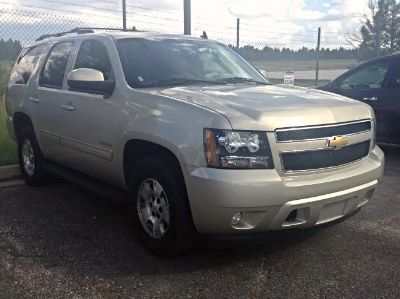
The LT is a step-up from the basic LS, with heated leather seats and a Bose stereo (amongst many features), but is below the range-topping LTZ that boasts standard features you would expect to find in a Porsche Cayenne. The handsome exterior was matched with a 5.3 litre Vortec V8 motor that produced a surprising 240kw of power and 450nm of torque, but you can option it with the 6.2 litre V8 when ordering through VAI.
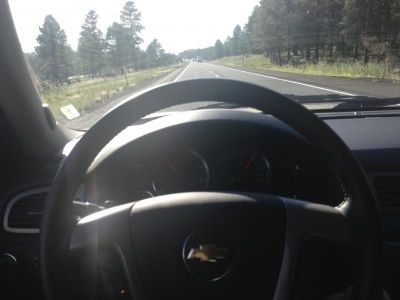
I shot off down the freeway with a big smile on my face, setting the cruise control to a comfortable 120kph as I familiarised myself with the car. My iPhone cable plugged into the USB port and streamed some roadtrip playlists as I pointed the car north towards the Grand Canyon. I was happy to be sitting there. I arrived at the Canyon just as the sun was on the horizon. That golden light cast shadows across that amazing place. I soaked it in before jumping back in the Tahoe setting off again.
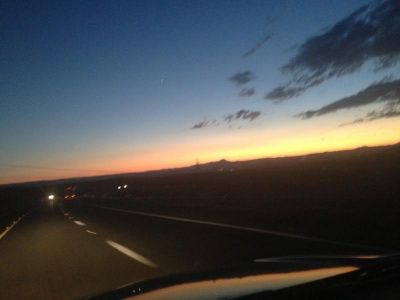
The drive from the Grand Canyon to Las Vegas was spectacular. The light at dusk was some of the prettiest I've ever seen and kept going for hours as I chased the sun. I kept my eye on the fuel gauge of the Tahoe, thinking that this American SUV would be sucking down the petrol like Coca-Cola, but the needle barely moved during the many hours of driving. Late into the night and without much left in me, the car drove over a peak and revealed a carpet of lights in the valley of Las Vegas.
In the context of the Australian market, the Tahoe makes a lot of sense. The car can be optioned with the 6.2 litre V8, which not only has a lot more power, it also makes servicing the car at your local Holden dealership a lot more convenient. They come in 2WD or 4WD, depending on what you need. They can be optioned with up-to eight seats and with a towing capacity of 5.5 tonnes. But the thing that makes the most sense is that the Tahoe is significantly easier to drive and (I suspect) live with than most Japanese seven-seater SUVs.
Like most Aussies, I expected the Chev to be an oversized, uncouth Yank Tank. But I couldn't have been more wrong. As the smaller sister to the celebrated Chevrolet Suburban, the Tahoe still boasts more than enough space for most people. But because it’s smaller, it’s easier to park and has better visibility. It has more useable space than a Toyota Kluger, but doesn’t feel too big for the road like a Toyota Prado can. The cabin is comfortable and has excellent build quality. There's a reason it has a consumer rating of 8.6/10.
I spent the next day driving everywhere. I’ll admit that I felt pretty good handing a Greenback to the valet and jumping into the captain’s chair of the Tahoe with my sunnies on. Around downtown Vegas the Tahoe was just as well-mannered and as easy to maneuver as ever, and looked spot-on in her metallic paint shimmering under the bright sun.
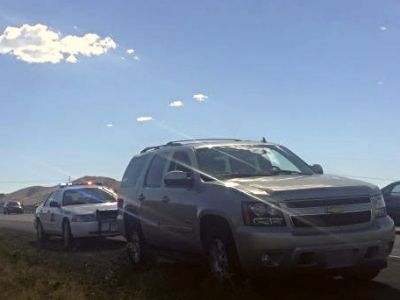
The following day I drove from Las Vegas to Salt Lake City, cruising through the enourmous cuttings that are a marvel to modern engineering. Normally after a few hours of driving, my years of bad posture tend to bite me in the lower back, but I was perfectly comfortable in the Chevy. The seats were big, not too soft (or firm), and had beautiful black piping trimmed throughout the leatherwork. Just over the border I had to fill-up for the first time since I’d started. Impressive considering I’d been driving for three days through a combination of city and freeway traffic. After swapping stories with a local uniform, I rolled into Salt Lake City to find my hotel.
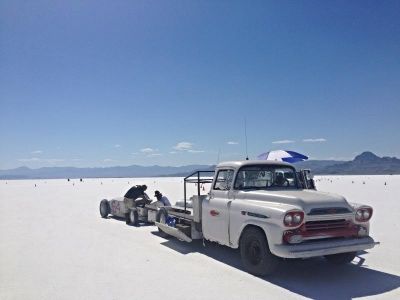
The reason for my trip was Speed Week. Each year, the Bonneville Salt Flats hosts mad people from across the globe, trying to go faster than they ever have before. I arrived the following afternoon. With the summer heat radiating off the brilliant white salt flat, I was thankful for the powerful climate control in the Tahoe. I marvelled at the incredible machines that lined the pits as the roaring engines echoed in the distance.
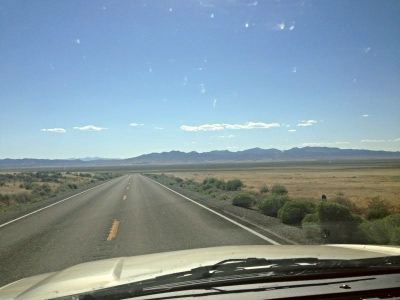
My ambitious plan was to leave Bonneville that afternoon and make my way to San Diego, at the very bottom of the Californian coast. About 700 miles. I dialled in Pahrump, Nevada into my GPS and set off. It told me to head south on a back country road that followed the original Pony Express, right down the guts of the state. Two hours in I found my first town. Then nothing for another couple of hours. The scenery was absolutely spectacular. Rolls of hills, crumpled up like a rug that's been pushed, and a road that cut straight through them.
Once again, the car performed flawlessly. It ate up the miles as I passed through Pahrump and charged towards San Diego through the warm night air. I hit my destination and visited a friend the following morning before heading to Los Angeles Airport, reluctantly handing back the keys to the Chevrolet. I’d absolutely loved the versatility of the car, being just as comfortable on the highway as it was around town. It would be a perfect family car or dedicated tow rig for touring. Throughout the roadtrip it exceeded my expectations.
VAI imports the Chevrolet Tahoe to Australia and performs right-hand-drive conversions that are as high quality as the factory fit and finish. They can order the Tahoe (or any other type of Chev, GMC, or Dodge truck) to meet your requirements.
Thursday, February 13, 2014
Dirty Dreams
When I was a kid I used to ride a little metal trike around the house. I wasn’t even all that young. I must have been around seven or eight years old, and the trike had clearly been designed for toddlers. It was made in a time when colour television was revolutionary and Bruce Jenner was still respected. The trike was blue and had hard white plastics grips and I used to ride it as quickly as I could around on the newly exposed floorboards. I loved the way the front wheel lost traction during acceleration and how the rear-end would oversteer around corners.
Around the same time, Dad would let me change gears as we drove our old Chrysler Galant. Any possible excuse to be involved in the driving. We got so used to it that it became the norm and we would carry a conversation as we came home together from school. It even got to the point where Dad would forget to change gears himself when he was alone in the car.
A few years later, after Mum had banned the trike from the indoors (and my being far too big for it by that stage anyway), I used to pretend the house was a rally stage. Every door was a ‘caution!’ corner between two trees, and each corner was loose with gravel or snow or mud. Even if I was walking normally I would be grabbing handfuls of opposite-lock in my head. But most of the time my hands were out in front of me, scrambling at the imaginary steering wheel and smashing the gearknob into second gear as the rear quarter-panel kissed one of the trees mid-corner. Often I would sneak off to go and sit in the car and practice driving, visualising myself cruising to school to pick up the girl I had a crush on that week.
When I was eleven I drove for the first time in a Holden SB Barina City on a fire-track half the size of the car. It was just before midnight and my father and I were setting up camp to get a few hours sleep before the Leonid meteor shower rained down above us. The experience lived up to all of my expectations. It was a world of freedom and responsibility that I craved.
From that point on, cars were it for me. Not even cars -- driving. I didn’t care what I was driving, as long as I was. I still have very same feeling today. For me, the sensation of driving provides me with one of the greatest feelings of freedom that I’ve experienced to date.
Sunday, February 2, 2014
Choosing The Best Car Loan
There are a lot of options out there when it comes to car loans -- often too many. As someone who has worked in the vehicle finance industry, here are some tips on how to find the best car loan for you.
(Full disclosure: RedStar Finance thought Track Shun was so cool and knowledgeable, they asked us to write an advertorial on the subject. Consider supporting a company that supports a grass-roots automotive blog.)
You can’t help who you fall in love with. For car enthusiasts, you can’t help what type of car you fall in love with. I know this because I have a particular soft-spot for the Jeep XJ Cherokee, despite it being not at all good for anything other than low-speed drifting in the wet. In most cases, the car you fall for will require car loan in order to make it a reality.
Deciding on which car will take residence in your driveway is one of the best parts of the process. Deciding on how to finance it can bring on trichotillomania, unless you know where to look and what to look for in a finance company. There are really two things that you want in a car loan: the best rate, and an easy application process. Our friends at RedStar Finance are one such financier that offers both same-day approval and cheap finance.
It’s easy to make claims like that without backing it up. But RedStar Finance is able to do both because they have a wider range of finance options. You see, most car finance companies will generally use a single bank to finance their loans. RedStar Finance gets to cherry-pick from seven of the best vehicle finance providers in the country, meaning their customers are always getting the option that suits their situation the best.
If your face turns into a spatula when you start trying to figure out what all the numbers mean, then I would suggest looking at the comparison rate. A few years ago the government introduced a mandatory comparison rate for all lenders. The point of the comparison rate is to incorporate all costs involved in the car loan (except for government fees, taxes, and insurance products), meaning you can compare it against another car loan to see which one will be cheaper for you in the long-term. It’s a great way to see how much you can expect to pay.
As someone who has worked for a number of car finance companies over the years, I’ve learned that the absolute cheapest finance isn’t necessarily the best. Some car loan offer greater flexibility and could be a better option for what you want to achieve. Which is why talking to a car loan expert at RedStar Finance is a good idea as they can recommend the best deal, potentially saving you thousands over the course of the car loan.
You can’t always choose which model of car you fall in love with. But you can choose which car loan provider will finance the purchase. Pick a company that offers same-day approval from a variety of banks, and has experts with proper experience.
Thursday, January 30, 2014
Driving Without Borders
In July of 2013 I purchased a 1993 Ford F150 Flare-Side V8 and drove from one side of North America to the other. I wrote about my adventures on the blog Driving Without Borders. Here is a small video I made of the roadtrip.
Driving Without Borders from Ben Zachariah on Vimeo.
Labels:
F150,
Flare Side,
Ford,
freedom,
Gone Fishin'?,
North America,
Roadtrip,
USA
Wednesday, February 13, 2013
Down & Out
I'm a bit of a closet Mitsubishi fan. My very first car was a 1979 Lancer fastback, and the brand has always done things that quietly impressed me. But everything they did felt like it could have been better still. (The pillarless Magna, the Triton, the capped-price servicing, to name but a few.)
The all new Mitsubishi Outlander continues that theme. In each generation of model variant, you look for and expect the car to feel like better version of the last. I felt that in my last article on the Hyundai i30. I felt it recently in the new Opel Astra. The thing about the Outlander is that it feels newer, like it has lots of technology and stuff for the salespeople to point at, but to the detriment of the car.
The CVT gearbox, which literally means Constant Variable Transmission (don't think about the name for too long), is just as shit as it's even been in any car, ever. Much like the transmission in the old Honda HRV my mother owned, it feels like a metal box filled with rubber bands that are controlled by the processor of an early Motorola Razr flip-phone. It's clunky, unintuitive, and absolutely fucking pointless when we have a century of R&D that makes conventional automatic transmissions infinitely superior.
The interior is a bizarre mix of excellent quality and very poor quality. The woodgrain in the Aspire model tested is actually quite good, but the centre dash uses an inconsistent piano black trim instead, surrounded by cheap plastic. The steering wheel is too thin and the leather too cheap, but the switches are great. The indicator stalk is not. I like the Rockford Fosgate stereo, but the super-bright screen for the grainy reverse camera almost blew my head off when I was in a dark car park at night.

Out on the road, the Outlander continued the theme of excelling in some areas and being really strangely bad in areas where it should be good. I like stiff suspension in my cars as it provides better feedback, and feedback means more information to the driver. The Outlander's front-end is stiffer than a teenage boy in a tittie bar, yet somehow provides absolutely no feedback through the incredibly odd steering. It felt like the steering box was made of cardboard. I've never felt anything like it and I absolutely hated it. The headlights are perfect. What truly surprised me, though, was how well this thing corners. The Electronic Stability Control is subtle and ensures the car is where-ever you want the front-end to point. The brakes and Electronic Brake Distribution work effectively. The engine is asthmatic and should be used in portable generators only. The ECO and 4WD buttons are laughable.
With Mitsubishi dropping their 10-year drivetrain warranty on their new cars, there's less incentive to buy one of their cars. Once you drive the all new Outlander, the incentive is almost nil. Bizarre is the word that keeps jumping in my head when I think of the latest Mitsubishi Outlander. It's like they've started with the old model, pop-riveted a bunch of new technological gadgets that they bought from eBay onto the car, and failed to drive it to see if any of it actually made the car better. If you're looking for a soft-roader, either get an ix35, or wait for the new Rav4 to arrive.
The all new Mitsubishi Outlander continues that theme. In each generation of model variant, you look for and expect the car to feel like better version of the last. I felt that in my last article on the Hyundai i30. I felt it recently in the new Opel Astra. The thing about the Outlander is that it feels newer, like it has lots of technology and stuff for the salespeople to point at, but to the detriment of the car.
The CVT gearbox, which literally means Constant Variable Transmission (don't think about the name for too long), is just as shit as it's even been in any car, ever. Much like the transmission in the old Honda HRV my mother owned, it feels like a metal box filled with rubber bands that are controlled by the processor of an early Motorola Razr flip-phone. It's clunky, unintuitive, and absolutely fucking pointless when we have a century of R&D that makes conventional automatic transmissions infinitely superior.
The interior is a bizarre mix of excellent quality and very poor quality. The woodgrain in the Aspire model tested is actually quite good, but the centre dash uses an inconsistent piano black trim instead, surrounded by cheap plastic. The steering wheel is too thin and the leather too cheap, but the switches are great. The indicator stalk is not. I like the Rockford Fosgate stereo, but the super-bright screen for the grainy reverse camera almost blew my head off when I was in a dark car park at night.
Out on the road, the Outlander continued the theme of excelling in some areas and being really strangely bad in areas where it should be good. I like stiff suspension in my cars as it provides better feedback, and feedback means more information to the driver. The Outlander's front-end is stiffer than a teenage boy in a tittie bar, yet somehow provides absolutely no feedback through the incredibly odd steering. It felt like the steering box was made of cardboard. I've never felt anything like it and I absolutely hated it. The headlights are perfect. What truly surprised me, though, was how well this thing corners. The Electronic Stability Control is subtle and ensures the car is where-ever you want the front-end to point. The brakes and Electronic Brake Distribution work effectively. The engine is asthmatic and should be used in portable generators only. The ECO and 4WD buttons are laughable.
With Mitsubishi dropping their 10-year drivetrain warranty on their new cars, there's less incentive to buy one of their cars. Once you drive the all new Outlander, the incentive is almost nil. Bizarre is the word that keeps jumping in my head when I think of the latest Mitsubishi Outlander. It's like they've started with the old model, pop-riveted a bunch of new technological gadgets that they bought from eBay onto the car, and failed to drive it to see if any of it actually made the car better. If you're looking for a soft-roader, either get an ix35, or wait for the new Rav4 to arrive.
Sunday, September 30, 2012
Small Surprises
It’s taken me years of practice to properly explain to normal people why it is that I’m a car guy. And since Hyundai released the first i30, it’s taken me years to figure out how to explain to other driving enthusiasts why it’s such a great car.
The first time I drove the original i30 it was a turning point for me. I’d never thought of a Hyundai as anything more than budget transport. But driving this zippy little hatch, I couldn’t keep the damn thing within the speed limit, and it remains the most fun I’ve had getting to and from a funeral. A few years later I took a diesel i30cw wagon down to Phillip Island for a weekend. It was bigger, better looking, and what it lacked in ‘zip’ it made up for with decent torque and amazing fuel economy. On the road the i30cw CRDi felt like a nose-heavy dart. With the weighty diesel engine at the front, the suspension felt like it struggled a little bit over road undulations, thumping and bouncing at its worst. Which wasn’t often.
Hyundai kindly loaned us their brand-spanking i30 diesel hatch as an evaluation vehicle for a time. My unabashed love for the previous model notwithstanding, I snatched the keys to see how this new model compares. It’s clear that their engineers have focused on the dynamics, playing with the suspension, moving the engine, and getting rid of that nose-heavy-dart feeling almost completely. The buttons, knobs, and all of the switchgear look as if they’ve been lifted straight out of the old model; which is no bad thing. Besides a redesigned interior with better quality plastics, it’s the ergonomics that impressed me. I really appreciate good ergonomics. The stereo also now comes with a built-in hard-drive so that you can transfer your favourite tracks so they’re always at hand. As a gift to my friends in the office, I’ve loaded up the stereo with a bunch of songs from a selection of genres.

The small capacity diesel, though not a powerhouse, is no slouch, either. Producing almost 100kw and 260nm, it’s more like a petrol engine in character. It’s mated to a traditional six-speed automatic transmission. For daily driving, the gearbox is damn-near perfect. It has the same feel of low-geared BMWs, taking off with purpose and no fanfare. For spirited driving, however, it’s not quite as capable. In manual mode, stuck next to that small oil-burning donk, it’s certainly got enough there to create some fun on twisty roads, but you’ll be wanting for more if you do any serious driving. The highway is where this car really shines, though. For the first time in a long time, I was actually enjoying driving down to the Peninsula and back. With a combined economy rating of 5.6L/100km, I almost ran out of fuel simply because I’d stopped remembering to look at the gauge.
It’s comfortable, practical, and one of the best all-rounders I’ve driven. In my mind, this model has overtaken the benchmark Toyota Corolla and market-favourite Mazda3, and now sits on par with the Honda Civic in terms of build quality. Hyundai have also introduced capped price servicing for the first three services, and are now offering 0.9% interest. But the kicker for me is the five year, unlimited kilometre warranty.
I’m clearly not the target market for this car. I’m a car guy that prefers manual, rear-wheel-drive cars with big engines that I can abuse all day long and generally break down on me all of the time. The idea of me owning an automatic Korean diesel hatch is absurd. But for a split second there, the thought did cross my mind. And that says a lot about this car.
The first time I drove the original i30 it was a turning point for me. I’d never thought of a Hyundai as anything more than budget transport. But driving this zippy little hatch, I couldn’t keep the damn thing within the speed limit, and it remains the most fun I’ve had getting to and from a funeral. A few years later I took a diesel i30cw wagon down to Phillip Island for a weekend. It was bigger, better looking, and what it lacked in ‘zip’ it made up for with decent torque and amazing fuel economy. On the road the i30cw CRDi felt like a nose-heavy dart. With the weighty diesel engine at the front, the suspension felt like it struggled a little bit over road undulations, thumping and bouncing at its worst. Which wasn’t often.
Hyundai kindly loaned us their brand-spanking i30 diesel hatch as an evaluation vehicle for a time. My unabashed love for the previous model notwithstanding, I snatched the keys to see how this new model compares. It’s clear that their engineers have focused on the dynamics, playing with the suspension, moving the engine, and getting rid of that nose-heavy-dart feeling almost completely. The buttons, knobs, and all of the switchgear look as if they’ve been lifted straight out of the old model; which is no bad thing. Besides a redesigned interior with better quality plastics, it’s the ergonomics that impressed me. I really appreciate good ergonomics. The stereo also now comes with a built-in hard-drive so that you can transfer your favourite tracks so they’re always at hand. As a gift to my friends in the office, I’ve loaded up the stereo with a bunch of songs from a selection of genres.
The small capacity diesel, though not a powerhouse, is no slouch, either. Producing almost 100kw and 260nm, it’s more like a petrol engine in character. It’s mated to a traditional six-speed automatic transmission. For daily driving, the gearbox is damn-near perfect. It has the same feel of low-geared BMWs, taking off with purpose and no fanfare. For spirited driving, however, it’s not quite as capable. In manual mode, stuck next to that small oil-burning donk, it’s certainly got enough there to create some fun on twisty roads, but you’ll be wanting for more if you do any serious driving. The highway is where this car really shines, though. For the first time in a long time, I was actually enjoying driving down to the Peninsula and back. With a combined economy rating of 5.6L/100km, I almost ran out of fuel simply because I’d stopped remembering to look at the gauge.
It’s comfortable, practical, and one of the best all-rounders I’ve driven. In my mind, this model has overtaken the benchmark Toyota Corolla and market-favourite Mazda3, and now sits on par with the Honda Civic in terms of build quality. Hyundai have also introduced capped price servicing for the first three services, and are now offering 0.9% interest. But the kicker for me is the five year, unlimited kilometre warranty.
I’m clearly not the target market for this car. I’m a car guy that prefers manual, rear-wheel-drive cars with big engines that I can abuse all day long and generally break down on me all of the time. The idea of me owning an automatic Korean diesel hatch is absurd. But for a split second there, the thought did cross my mind. And that says a lot about this car.
Friday, July 8, 2011
The Prancing Horse
As a child I used to play with Matchbox cars about as much as kids nowadays watch Ben 10. I.e, more than is healthy. Each car would have its own garage between the black keys of our beautiful, ancient piano. Probably my favourite would have been the Ferrari, which I now know was a 308 GTB. It was aggressive and confident; masculine yet feminine. It just stood out amongst all my other cars. So much so, in fact, that I've always identified myself as a Ferrari guy, as opposed to Lamborghini people, who grew up with Countach and Diablo posters adorning their bedroom walls.

A friend of mine recently imported a fibreglass-bodied blue Ferrari 308 GTSi Quattrovalvole from England, and due to a road accident, he unfortunately can't drive for a few months. Nick offered me a drive in the Ferrari, which was literally a dream I've wanted to fulfill since I used to wet the bed (a few months back). Naturally, I jumped at the chance.
Most Ferraris are so well designed, so proportionately perfect, that it's hard to get an idea of how big they are in the real world when you see them in print. Their latest Grand Tourers are monstrously huge, but their Enzo-era sports cars are surprisingly small. Pininfarina, and to a lesser extent, Bertone and Zagato, are masters at ensuring that overweight cars look like supermodels, and tiny cars have the desired amount of road presence. So, as I walked around the 308 I was about to drive, I couldn't help think how this Ferrari was the approximate size of my old NB MX-5. A concept I struggle with, even now.


Older Ferraris are known to be difficult to get in and out of, but the 308 wasn't all that hard. In fact, I almost enjoyed the small challenge. It's not as difficult as, say, a Lotus Exige to enter and exit, but it's challenging enough to make you aware that you're not just jumping into any old car. You know you're about to drive a Ferrari.
Turning the key produced nothing except a click and some faded lights on the dash. After spending almost an hour waiting for the Marshall Batteries man to come out and looking over the car to try and find the battery (FYI, it's under the spare wheel), we finally got it started. We enjoyed about 30 seconds before the car used the remaining petrol in the fuel lines. Customs had, of course, drained the tank. After a stint to the petrol station by the kind battery man, I was on my way.
With the car briefly warmed up, the dog-leg gearbox was fantastically stiff and notchy. It was a joy to use the chrome, gated shifter. The pedals are close together and off-centre and there is no dead pedal. This means that heel-toe downshifts come easily, but your left foot cannot relax is and is always at the ready. Another sign, then, that this is not a vehicle to pop down to K-Mart in.

But the engine told another story. In normal traffic, the car was positively placid. It was calm, easy to drive, comfortable. For the trip across town, I wondered whether drivers of the past were just pansies who got hard-ons for anything that looked a bit sexy. Except for the noticeable weight difference and quality interior finish, it didn't feel worlds apart from my 1979 Mitsubishi (Chrysler) LC Lancer fastback.
That was, until, I got to the other side Melbourne and onto the starting grid of a set of traffic lights, revealing an open, five-lane highway. Not wanting to destroy a Ferrari clutch, my launch wasn't particularly aggressive, but it was still surprisingly quick. The car pulled away from the lights with purpose and with a crescendo of metallic, roaring noise. Above 4,000 rpm the V8 mounted behind my left ear really came alive and planted all 240hp (179kw) to the fat Michelin TRX tyres at the rear. Gear changes aren't fast, but I'm sure practice would improve this. Through second and third gears, the Ferrari is wonderfully quick. I can only imagine it being akin to flying an old Spitfire. It's all about feeling connected with the entire car. You sit within it and become a part of it. Sitting so close to the ground just enhances the feeling of speed. It's a beautiful experience for a driving enthusiast.
As the rain set in, there was only one exciting moment when the back-end started to out-pace me through a long corner. The vehicle is so well balanced that it was easy to drive through the drift and correct it smoothly. Considering that the engine is mounted towards the back of the car and I was running on 30 year-old TRX tyres, I was surprised that was the only butt-clenching incident. Happily surprised. The brakes seemed fine, but in that weather I wasn't going to put myself in a position to test their full potential. The (non-powered) steering, though well weighted at speed, is unpredictably heavy and requires a bit of strong-arming when crawling along.
With dark clouds and teeming rain, I was able to get acquainted with the quirky electronics of the Italian sports car. I turned around and headed to my final destination, enjoying the pop-up headlamps (that are now extinct on modern cars) and charismatic window wipers. Yes, even the wipers on older Ferraris have character.
And that's really what this experience has taught me. Emissions laws, safety regulations, and the need for cars to be able to do everything imaginable has meant the driver is so detached from the modern car. People may look at owners of older, unloved Ferraris such as Mondials and 308 GT4s and think that they're badge snobs, but I'll know better. These cars have more charisma and driver interaction than damn-near all sports cars sold in the past decade.
Time to get my Matchbox cars out and start dreaming again.

Special thanks to Nick for the opportunity of a lifetime. Get well soon, mate.
Labels:
308,
battery location,
cars,
Drifting,
Ferrari,
GTSi,
Matchbox,
Zen Moment
Tuesday, July 5, 2011
2011 Australian International Motor Show
The 2011 Australian International Motor Show. The impressive-sounding name almost implies that our market is respected by international automobile manufacturers. The unfortunate truth is that we're not. We get the old concept cars that have already done the rounds for the past year, and if we're lucky, we might get a left-hand-drive version of some model we probably won't ever see on our roads. This year was a prime example.
Not only that, but we only get the Motor Show in Melbourne once every two years now, as we alternate with Sydney because of financial concerns the car makers had. I can deal with that, though, as an annual show of the same cars does get a bit tedious.
But when my most anticipated manufacturer, BMW, doesn't bother to bring any cars that are on sale, I get annoyed. Their special eco-hybrid concept car thing, which came out ages ago, is not particularly interesting. I'm not allowed to sit it in, I'm not going to be buying the thing in the next couple of years, so it's really only a study in car design. Yes, it's a nice concept car, but it's not real. And that's what the Motor Show should be about.
We all read the specs in the magazines, look at the pictures, and watch the videos on YouTube. But the Motor Show is where you get to sit in and feel what each car is really like. Of course, it's not quite as good as driving them, but you're able to experience the ergonomics, the seating position, the slickness of the gearshifter, and the quality of the leather and plastics.
The new Range Rover Evoque was impressive, and as it's based on the Freelander2 that I so enjoyed, I imagine will be a cracking drive, too. As cool as it was, with Recaro-esque seats (without the bolstering), leather-trimmed dash, and huge moon-roof, the price-tag is still far too hefty for my liking. The Sport we looked at had two doors and was $127,000. Poor value.
The Mitsubishi Lancer Ralliart was good value when compared to the Evolution that sat next to it (if you made it to the top of the stairs without a sherpa). But drop the extra $10k on a Volkswagen Golf R, with real, thigh-bruising bolstering, blows the idea of the Lancer right out of the water.
Audi's R8 Spyder continues to be one of the most beautiful supercars on sale. The Audi designers should teach the Lamborghini designers what a curve is.
Mercedes-Benz had their new C63 coupe alongside their new CLS63 and SLS. The CLS was the most striking in it's red bodywork with big black wheels and beautifully designed interior. However, the SLS didn't draw on my emotions like the original 300SL Gullwing at the other end of the building. Most people walked past the "new" SLK without realising it was there. Mercedes-Benz will have a hard time against the Z4.
Despite not having many models for sale in Australia, Skoda put on a good show, even allowing people to sit in their (real!) rally car, which was nice. They continue to surge forward in Australia with ever-growing confidence.
Holden and Ford continue to copy everyone else as well as themselves (both releasing Black Editions, really?). At least FPV is learning that the subtler, the better.
There were a number of things I took with me after I'd left the Show this year. The first was that I was utterly disappointed that there was no BMW stand. No M3 Pure, no 1M, no M5. The second was the feel of the Mercedes-Benz G-Class, which, in my mind, won the award for best supporting actor. I loved how agricultural and secure the doors felt and how they didn't feel like doors on any other car at the show. My final thought was how I still yearn for a Maserati Quattroporte GTS. They are one of the most magnificently looking and sounding cars in the modern era.
Thursday, June 23, 2011
Traning Wheels, Postscript
A few years back I wrote two articles that looked at driver training for young people. Training Wheels, Part One and Part Two expressed my frustration at how young people are told not to speed and be idiots on the road, but are rarely exposed to the consequences. Unless they are forced to live through a horrific event, they don't realise just how easy it is to ruin or end a life by way of a car.
At the time, I said that it would be beneficial to expose kids to a crash. Strap them into a car and roll it, or even crash a car into a pole at 50kph in front of them. It sounds a bit far fetched, but it wouldn't be quite as hard to do as you would imagine.
So I was very heartened to see the NSW Premier leading an in-your-face demonstration for schools. As the video of the event shows, it was a very confrontational experience for the students, who had to graphically witness the death and trauma caused by a common road accident.
Bravo to the NSW Government for supporting this initiative.
Labels:
cars,
Don't Do This,
Driver Training,
Driving,
Risk,
trackshun
Tuesday, February 15, 2011
Practically A Porsche
When the Cayenne was released almost a decade ago it was somewhat controversial. The car was pretty ugly, it felt poorly designed, and it didn’t drive the way one would expect a Porsche to drive, SUV or not. We were expecting something better than the benchmark SUV at the time, the BMW X5, and it just wasn’t.
The second generation, all-new Cayenne is a different beast altogether. It seems to have shaken all previous criticisms and evolved into something worth pining for. Sitting in the supportive leather seat, the interior feels like it was based on Porsche’s four-door GT, the Panamera, which is no bad thing. The leather, plastics, and metal highlights really heighten the sense of luxury in the cabin. The buttons have an excellent feel to them, and none of the interior panels have that cheap hollowness to them that plagues cheaper (and not-so-cheaper) SUVs.
Porsche’s engineers really lifted their game with the new Cayenne. For sure, it’s nowhere near as rewarding to drive as its stable-mates, but as far as the luxury SUV sector goes, this is up there with the best of them. It’s a very easy car to drive on a daily basis and at no time do you feel as if you’re behind the wheel of the two-tonne tank that it is. There’s an overwhelming sense of weight and security behind this thing, but not at the expense of its handling or its pace. The Cayenne holds flat around corners and is beautifully neutral in feeling.
But it’s the engine that really impresses. The turbo diesel V6 strikes an almost perfect balance between power (176kw), torque (550nm), and fuel economy (7.4L/100 combined). The exhaust note isn’t as horny as the V8 option, but it means the car feels calmer to drive. That endless torque constantly invites your foot to sink into the pedal to propel the Cayenne down the road, in the same absurd fashion as the Range Rover Sport TDV6 or BMW X5 xDrive40d. It’s a very enjoyable machine to captain. Pulling up at the lights will trigger the auto stop/start feature which will turn off the engine to save fuel until you lift the brake, when the engine fires to life in an instant.
This particular Porsche also enjoyed keyless entry and start, which means that simply having the key in your pocket is good enough to jump in and drive off. The auto-tailgate was appreciated when carrying a few too many bags of groceries, and I’m sure the soccer mums with babes-in-arms will love it too. Handy features that make living with the Cayenne very easy. It doesn’t have the most luggage space in its market, but it has more than enough to satisfy most families. The ride height, coupled with its big doors, makes the Cayenne effortless to enter and exit.
If you’re looking at a practical, well-built SUV, it’s very hard to look past Porsche’s latest Cayenne diesel. It’s not going to break any land-speed records, but with a truckload of torque and CO2 figures that are better than a four-cylinder Mazda6, along with practical, real-world features and an excellent design, it’s very hard to ask for anything more in a luxury SUV.
Subscribe to:
Posts (Atom)